
A Lesson from Strawberry Season
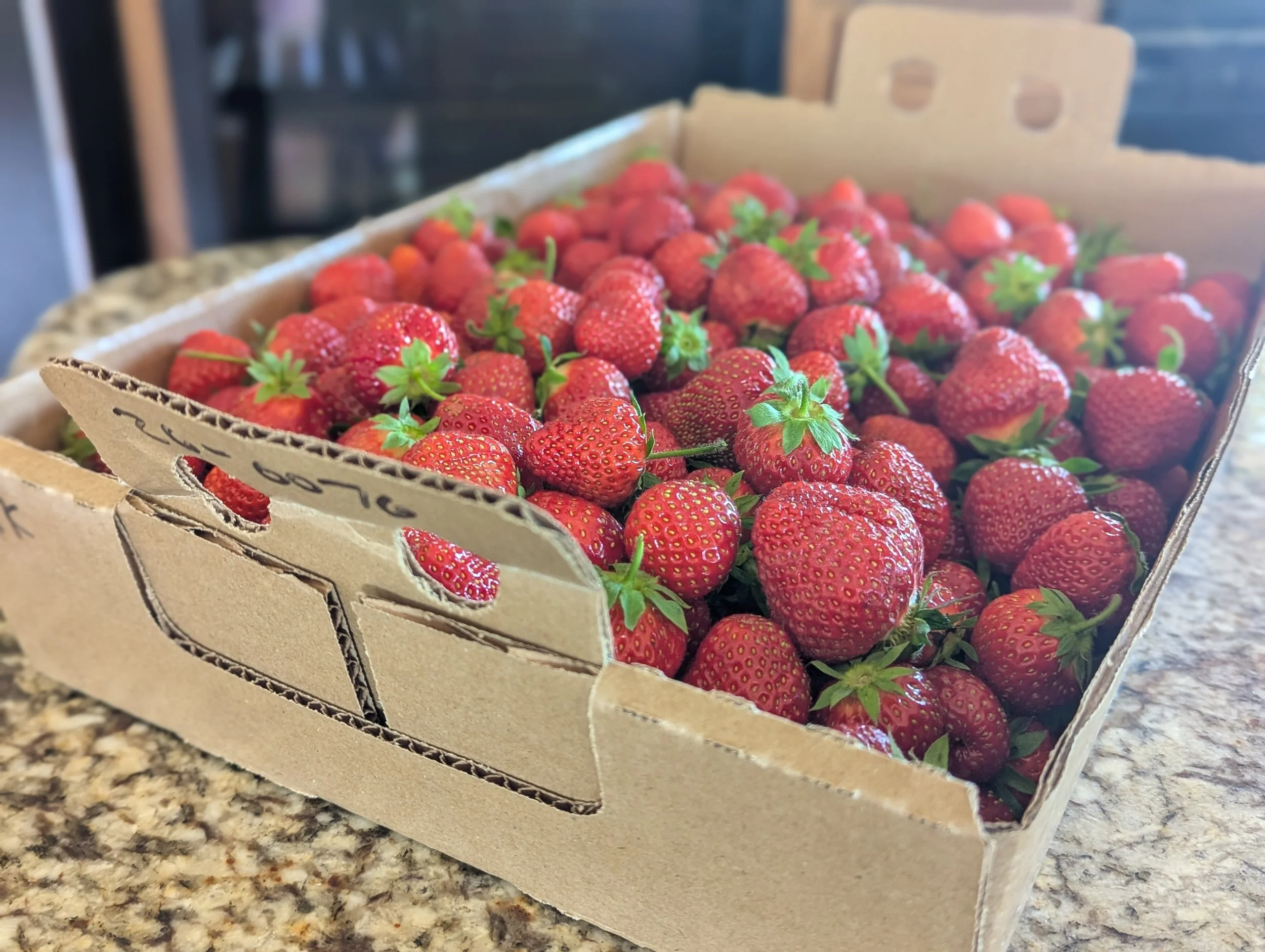
Every June, I look forward to fresh Minnesota strawberries. But the season here is short.
There’s a narrow window when the berries are ripe and worth picking. And once it closes, that’s it. No rain check, no extension, no second chance until next year. This year, I made a spur-of-the-moment decision to head to the patch early one morning.
My default mode would have been to think about it, check the calendar, see how the week was shaping up, and maybe go “later.” Instead, I got in the car and went.
It was quiet and cool, and there was something almost meditative about kneeling between the rows, sorting through leaves, and filling my container one berry at a time. It was a peaceful, simple way to start the day—and the strawberries were delicious.
What’s stayed with me isn’t how good they were. It’s how close I came to missing them. Because the truth is: I am sometimes slow to make decisions. I can over‑scan, over‑process, and wait for more clarity than the moment can actually give me.
Most of the time, that shows up as “thoughtful” or “careful.” But sometimes, if I’m honest, it’s hesitation dressed up as responsibility.
Out there in the field, it struck me how different this decision had been. There was no spreadsheet, no list of pros and cons, no “let’s see how I feel later this week.” Opportunity was knocking and I could answer or not. The strawberries were not going to wait until I had fully optimized my schedule. They were ripe now. And that was the only information that really mattered.
In our work, we often behave as if every opportunity is flexible, that we can stretch it by asking for one more meeting, one more round of input, one more report. We tell ourselves we’re being wise, measured, and thorough.
Sometimes we are. But often those decision-making moments are more like strawberry season than we’d like to admit. They are time‑sensitive by nature. The ripeness is part of the opportunity.
As someone who can be slow to decide, this is uncomfortable to acknowledge. I like having time. I like understanding the angles. I like the feeling that someday, if I think long enough, the “right” answer will become obvious and painless.
But leadership keeps reminding me that some decisions don’t become clearer with time. They just become smaller. Or irrelevant.
And truth be told, not making a decision IS a decision. But not an intentional one.
Learning to Move When the Time Is Right
Lately, I’ve been asking myself a few simple questions:
Is this a decision that will genuinely improve with more time? Or does waiting simply feel safer?
What, exactly, am I waiting for? If I can’t name it, I’m probably stalling.
What will be different if I revisit this in a week or a month? If the honest answer is “not much,” then “later” is just a softer word for “no.”
“The right time” often doesn’t feel clean or calm. It feels like a mix of “This matters,” “We know enough,” and “It will be overripe if we wait.”
That might look like:
A team that’s energized and aligned now, before competing priorities dilute their focus
A client who is open, curious, and asking real questions that need to be answered thoughtfully but quickly
A sliver of unplanned space in your schedule that is suddenly there
Those are strawberry‑season moments. They don’t show up with a label. You recognize them by paying attention to ripeness, not perfection.
Three Practices for the Slow Decider
Because I know my tendency to delay, I’ve been experimenting with small practices to help me move when the time is right:
Pre‑commit to action when you recognize ripeness.
“If the team is still aligned by Friday, we’re moving forward with the project.”
“If this candidate is a fit after the second interview, we won’t add a third.”Set real deadlines that reflect the season, not your comfort.
“This opportunity is likely to be good for about 30 days. We’ll decide within 10.”Name the cost of waiting, out loud.
“If we don’t move now, we risk losing their attention,” or
“If we push this to next quarter, it will compete with three other priorities.”
None of this makes decision‑making effortless. It makes the trade‑offs visible.
A Challenge for This Week
If, like me, you can be slow to decide, here’s a gentle challenge:
Identify one area of your work or life that feels like strawberry season right now—something that is especially ripe in this moment: a relationship, a possibility, a piece of work that wants to move.
Ask yourself:
What am I waiting for that I’m realistically unlikely to get?
What will I lose if I keep waiting?
What is one concrete action I can take while the window is still open?
And then, without perfect conditions or another round of analysis, act.
You don’t have to change your entire decision‑making style overnight. But you can start noticing the windows of opportunity that won’t wait for you to feel ready. Maybe you’ll find yourself willing to grab them while the berries are still ripe.